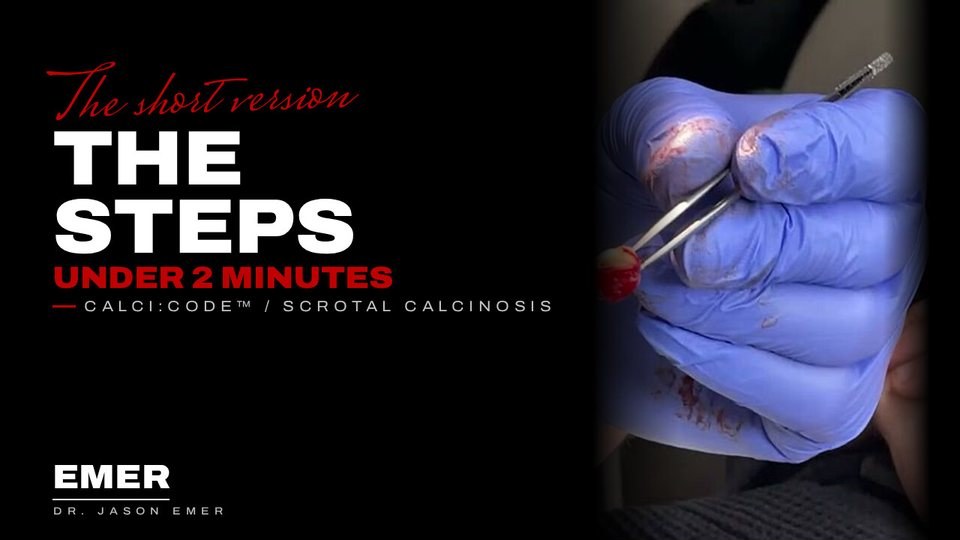
Hard white bumps on the scrotum? That is usually scrotal calcinosis, and it can be removed
Short answer. Scrotal calcinosis is a benign condition in which small, firm, chalk-white nodules of calcium form in the skin of the scrotum. Most are thought to begin as tiny skin cysts that calcify over years. It is not cancer, it is not a sexually transmitted infection, and it is not contagious. Creams do not dissolve it. The only reliable way to clear the nodules is to remove them, and the way they are removed decides whether new ones keep appearing. Dr. Jason Emer removes them in the office under local anesthesia with a method he calls CALCI:CODE™.
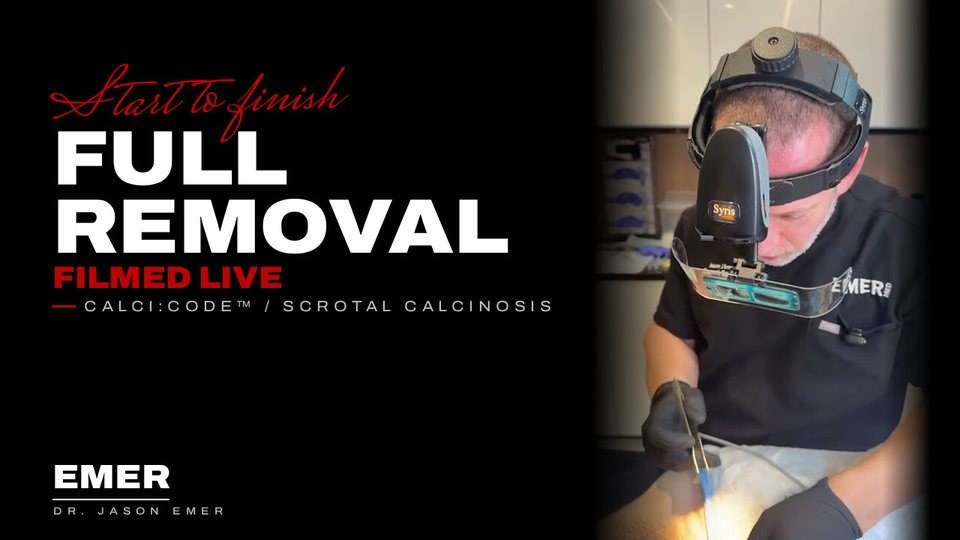
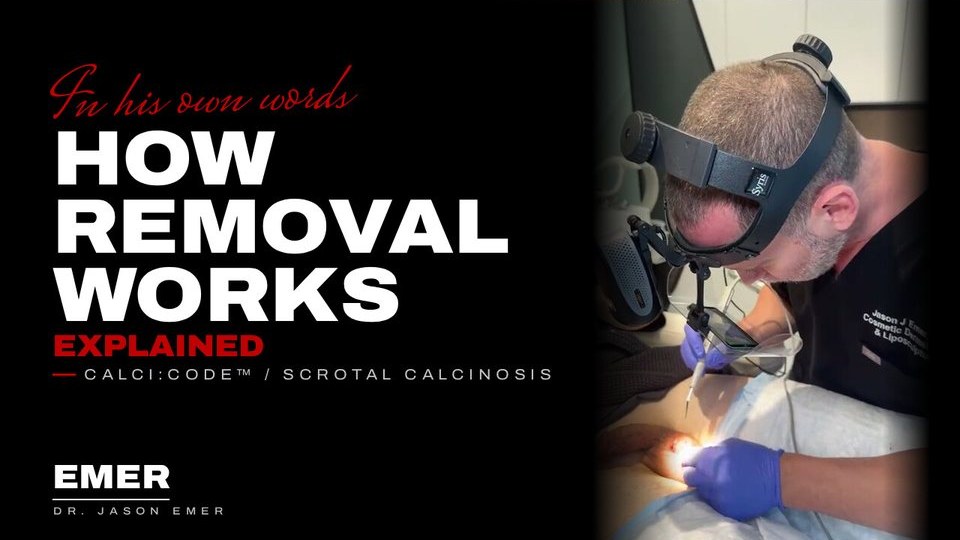
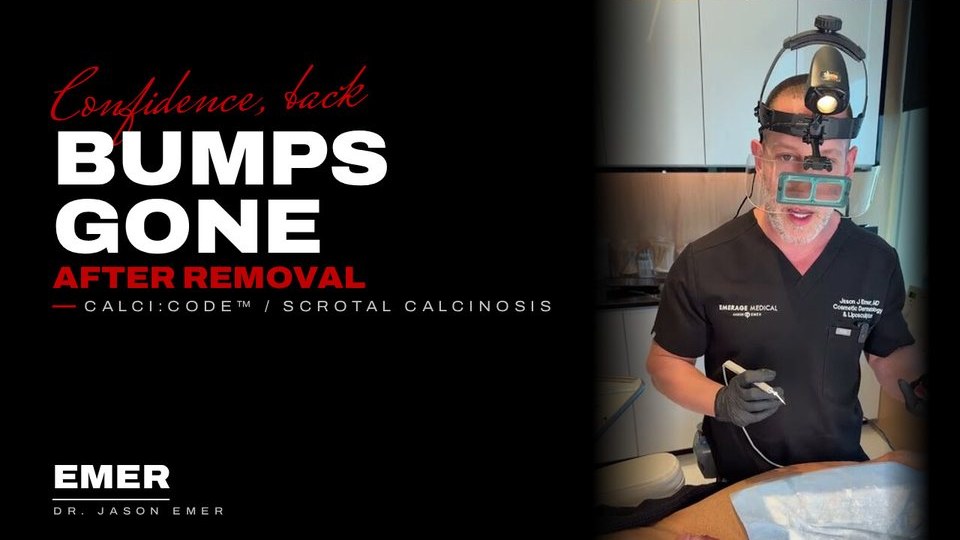
Case A · West Hollywood, filmed live November 2026
Man with multiple scrotal nodules
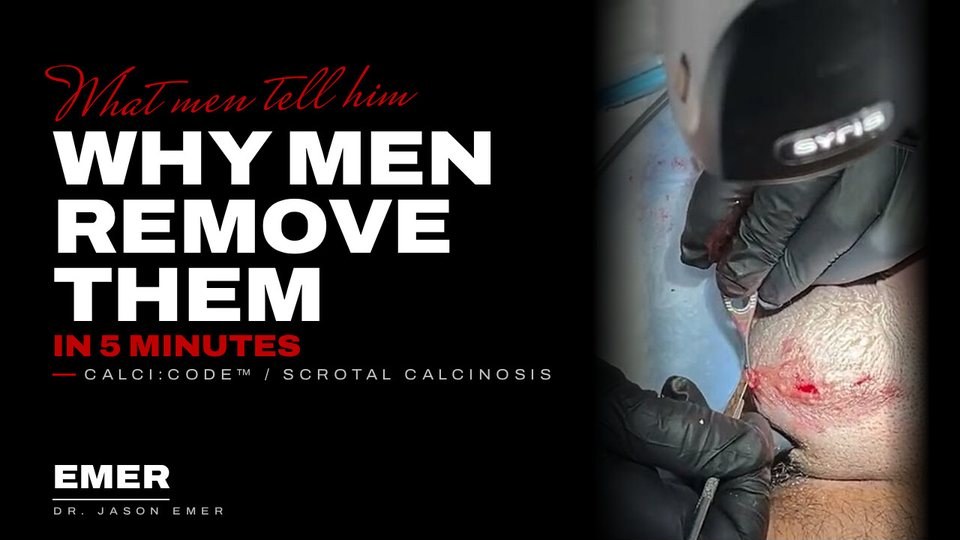
CALCI:CODE™ excision with the pull-through technique and electrodesiccation of each base, a few fine stitches, BIOREIN™ regenerative injection at closure, first laser hair-removal session.
Shows every step, start to finish, in the 26-minute film.
This film shows the procedure and intimate anatomy. YouTube asks you to sign in to confirm your age before it plays.
Jason Emer, MD, FAAD, FAACS, a board-certified dermatologist (American Board of Dermatology) and a Fellow of the American Academy of Cosmetic Surgery, in practice since 2007.
He has filmed the procedure live for patients who chose to share it, so you can watch exactly what happens before you book.
Highlighted cases
Case A
Man with multiple scrotal nodules
What was done
CALCI:CODE™ excision with the pull-through technique and electrodesiccation of each base, a few fine stitches, BIOREIN™ regenerative injection at closure, first laser hair-removal session
Where
West Hollywood, filmed live November 2026
Why it matters
Shows every step, start to finish, in the 26-minute film
Case B
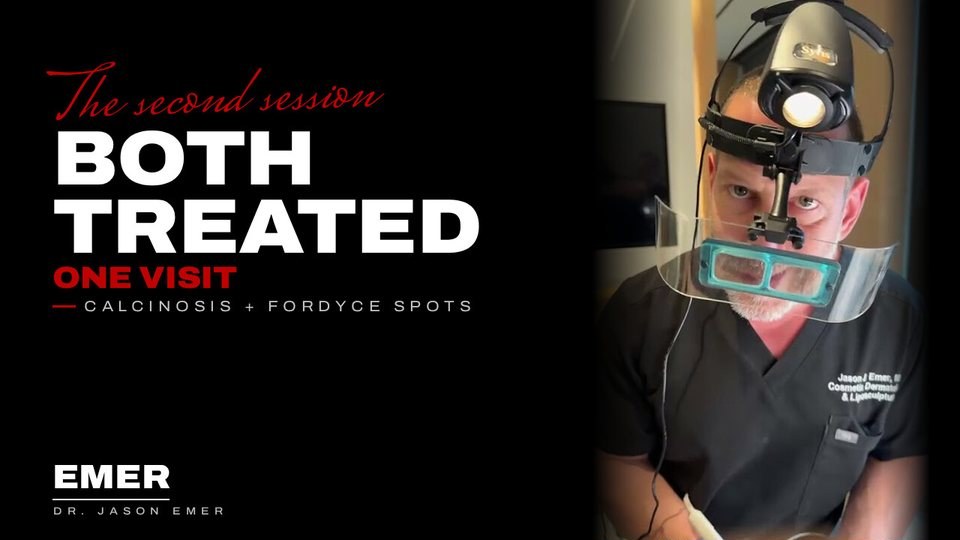
Man treated over three visits
What was done
Desiccation and pull-through of nodules, Aerolase® laser hair removal, BIOREIN™
Where
New York, June to October 2026
Why it matters
Shows that a staged plan clears what one visit cannot
Every nodule, down to the base. That is the whole difference.
What scrotal calcinosis is
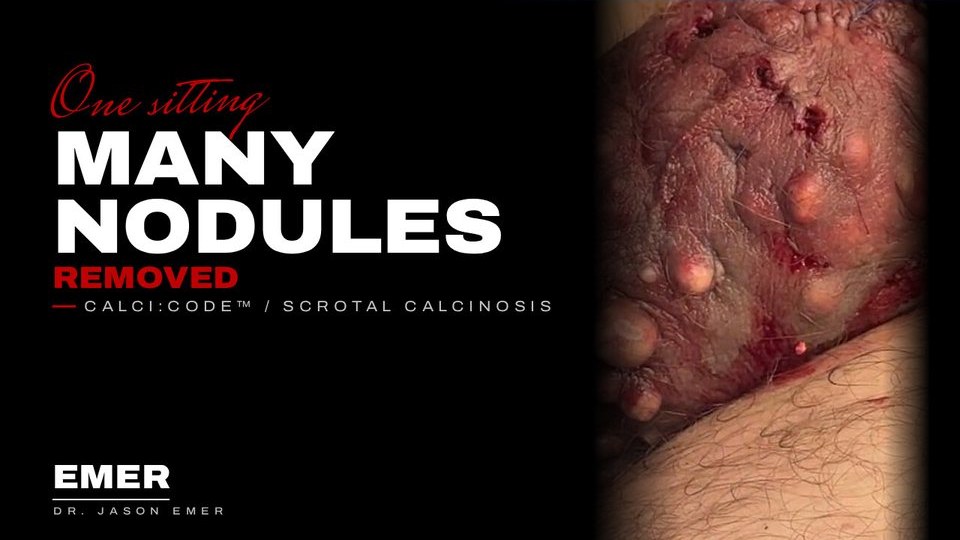
The nodules sit in the skin, not in the testicles. They range from a pinhead to the size of a pea, and some men have a few while others have dozens. They are usually painless, though some itch, rub, or leak a chalky material if they break open. They tend to start in the late teens to forties and slowly grow in number. Many men live with them for years because they are embarrassed to ask, or because they were told nothing could be done.
The leading explanation, supported by most case series, is that small epidermoid or follicular cysts in the scrotal skin calcify over time. A smaller group of cases appears to form calcium without an earlier cyst. Blood calcium and phosphate levels are normal in almost every man who has it, which is why it is called idiopathic. A biopsy is not needed for the typical appearance, but anything unusual is sent to pathology.
Nine films
In Dr. Emer's own words
These films show the procedure and intimate anatomy. YouTube asks you to sign in to confirm your age before they play.
Shaved scrotum, examined systematically under bright light and magnification so the small nodules are mapped too
Missed small nodules are the main reason new bumps appear later
Anesthesia
Often general anesthesia in an operating room
Local tumescent anesthesia in the office, no general anesthesia
Awake, home the same day
Removal
Elliptical excision of the large nodules, or cutting away a section of scrotal skin
Punch or pull-through removal of each nodule with its base, at the level of the dartos muscle
Removes the root, not only the visible top
The base
Usually left alone
Each base electrodesiccated (hyfrecation)
Dr. Emer’s own step; no published study has tested it yet
Skin around it
Not addressed
Laser hair removal (Aerolase® 1064 nm, typically four sessions, starting once healed)
Fewer hair follicles means fewer new cysts to calcify
Healing
Stitches and wait
BIOREIN™ regenerative injection at closure, silicone scar gel, a 7 to 10 day antibiotic course
Faster, finer healing on thin skin
Scars
Accepted
Laser scar refinement if any line remains
Thin scars become hard to see
Plan
One operation
Staged visits when there are many nodules
Safer than removing too much skin at once
Your scrotum is not where you want a rushed surgery. It is where you want a plan.
What the published evidence says
Every study of scrotal calcinosis is a case report or a small case series; there are no randomized trials, because the condition is rare. The published reports agree on three points. Surgical excision is the standard treatment. New nodules can appear after removal, mostly when small nodules were missed or the base was left. Wide removal of scrotal skin works for extensive disease but leaves a larger scar.
Dr. Emer examines the skin, counts and maps the nodules, and plans one or more visits
You know how many visits before you start
Before
Shave the scrotum as fully as you can before the visit
Small nodules can be seen and mapped
The procedure
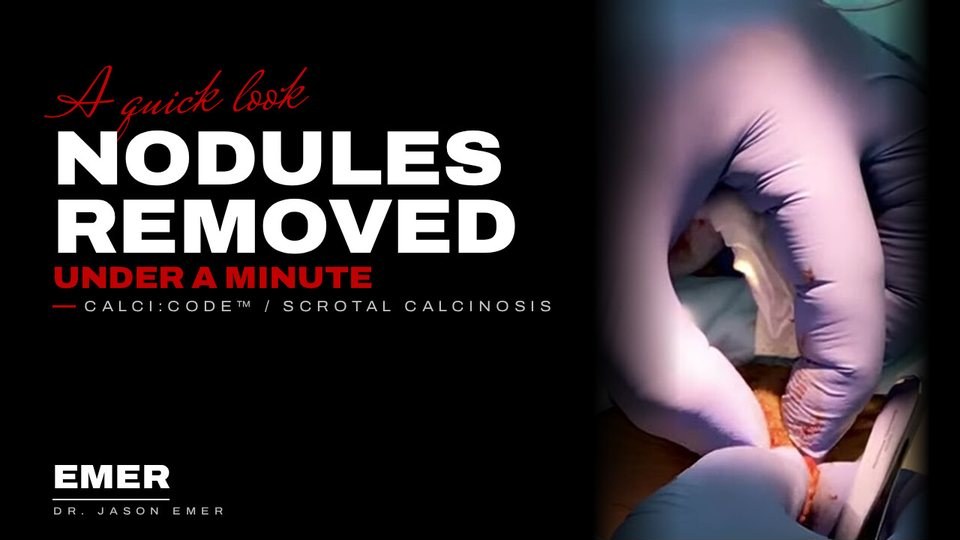
Local numbing, then removal of each nodule with its base, then fine stitches
Awake, in the office
First two weeks
No sexual activity or masturbation for two weeks; keep the area clean and dry; finish the antibiotic course
Lets the stitches hold
Weeks 4 to 6 onward
Laser hair removal begins once the skin has healed
Lowers the chance of new cysts
Follow-up
Remaining or new nodules are treated at a planned second visit
Clearance is checked, not assumed
Results and the number of visits differ from man to man. New nodules can still appear in some men after any method of removal; the method above is designed to lower that chance, and a follow-up visit is part of the plan.
Questions men ask
Is scrotal calcinosis cancer?
No. It is benign. Anything that looks unusual is sent to pathology.
Is it an STD? Can I give it to a partner?
No. It is not an infection and it is not contagious.
Will creams or diet make it go away?
No cream, diet or supplement has been shown to dissolve the calcium. Removal is the treatment.
Does removal hurt?
The area is numbed with local anesthesia, so most men feel pressure rather than pain during the procedure. Soreness afterward is usually mild; you will get instructions for it.
Will there be scars?
Each removal leaves a small line or dot. Scrotal skin heals well and the lines are usually faint; laser refinement is available if one stays visible.
Will it come back?
It can, mainly from small nodules that were not removed or bases that were left. That is why CALCI:CODE™ maps every nodule, removes each base, adds laser hair removal, and includes a follow-up visit. No study has published a recurrence rate. Returns have been reported 19 to 33 months after removal, and once after three years, which is why your follow-up visit matters.
How many visits will I need?
Men with a few nodules often need one. Men with dozens usually need two or more, planned at the consultation.
Do I need general anesthesia?
No. Dr. Emer performs it under local anesthesia in the office.
When can I work out or have sex?
Most men return to desk work within a day or two. No sexual activity or masturbation for two weeks; Dr. Emer will tell you when to restart heavy exercise.
Is it covered by insurance?
It is usually treated as cosmetic. Your coordinator will explain the costs at your consultation.
Do you treat it in New York?
Yes. Dr. Emer sees men in West Hollywood and at 57 W 57th St in Manhattan.
Consultation fees are non-refundable. The fee is credited toward the treatment you consulted for when that treatment is booked within 30 days, and is not credited toward skincare or peptide purchases. Monthly payments are available through PatientFi: see financing.